The Brand Guidelines That Enforce Themselves
Brand guidelines stop being a PDF nobody opens. How the Embedded Design System keeps every faculty on-brand by default, with no manual review.


Key Takeaways
- The PDF nobody opens: every faculty interprets visual identity its own way, and the Brand Manager ends up correcting instead of building the brand.
- Brand protection by default: the Embedded Design System embeds colors, typography and components directly into the publishing tool itself.
- Five brands, one quality bar: Universidad Europea runs five distinct schools with 16 people, with no brand ever bleeding into another.
The PDF nobody opens
The brand guidelines are up to date, they look great, and an expensive design studio reviewed them. They’ve also gone months without anyone in the Business school opening them before laying out their next campaign. The result: a typeface that isn’t the corporate one, a blue that isn’t quite the right blue, a logo stretched two points too far. None of this breaks anything technically. All of it breaks the brand you’ve spent years building.
You see it before anyone else does — it’s your eye that was trained to spot a two-point difference in a logo, not the eye of whoever laid out the campaign. You didn’t design it that way. You found it that way — and now it’s on you to fix it before it goes live, instead of spending that time building the brand you’re supposed to be leading.
From ignored PDF to a system that enforces itself
The Embedded Design System turns the brand guidelines into the publishing tool itself: colors, typography, components and spacing are embedded in the editor where every faculty, every campaign and every story gets composed. Publishing off-brand stops depending on the design judgment of whoever is publishing — the system already carries it built in. Brand protection by default, not a review round afterward.
According to its own documentation, Griddo is the only DXP with a design system that’s embedded and fully adapted to each institution’s brand: every theme is parameterized to the institution’s real brand structure, including institutions managing several brands at once.
Five brands, one quality bar
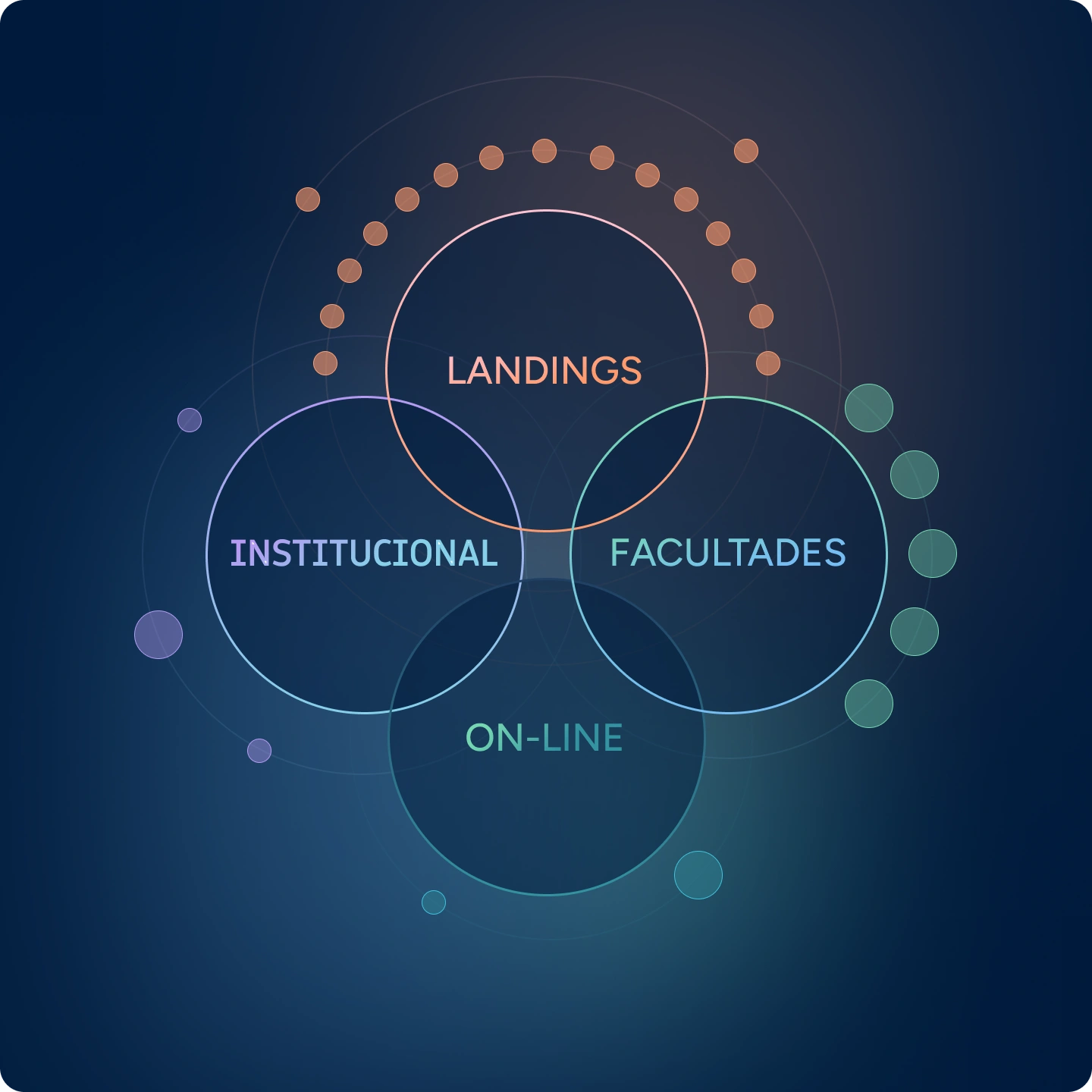
At Universidad Europea, five distinct schools and brands coexist — IPAM in Porto, IADE Portugal in Lisbon, IADE Spain in Madrid, UDDI (fully online) and Centro de Estudios Garrigues, a joint venture with the law firm —, each with its own visual expression and its own editorial calendar. Sixteen people operate the five instances, and seven of them work across two or three at once — switching brands several times a week without any of them bleeding into another.
As Sara Hontoria, from Centro de Estudios Garrigues, sums it up: “Thanks to its Embedded Design System, we have absolute autonomy to manage our digital assets quickly and comfortably.”
None of the five brands needs you to review every piece before it publishes. The system already knows which typeface, which blue and which logo proportion belongs to each one.
An 18-year-old choosing between five universities from their phone reads the brand too: a website that changes appearance depending on which faculty you visit sends exactly the outdated, unreliable signal that hurts an enrollment decision the most. Visual consistency is one of the signals, quiet but real, that student uses to decide who to trust.
The time the guidelines give back to you
Brand Awareness, Share of Voice, Net Promoter Score: those are the metrics that actually evaluate you. Every hour the system saves you from correcting an ignored PDF is an hour you can reinvest there — in brand perception, which is the real job. And once visual consistency stops depending on manual review, what’s left exposed to evaluation is the brand itself — whether it connects with the people who see it, not whether someone skipped the guidelines this week.
That reclaimed time is also what lets you go research what actually makes a university brand stand out in a sector where almost all of them look alike.
How to talk about this with your CIO, your CMO and your Communications lead
System limitations
Where this fits
This article is part of Griddo Journal’s Governance cluster.
Back to the Hub: Centralize Without Suffocating →
If you lead Communications, start here →
Your next step
If you’re still reviewing materials instead of building the brand, let’s talk about how much of that time you can get back.