The university that publishes faster enrolls sooner
Speed to publish is speed to enroll: why unifying your university's web ecosystem drives applications, enrollment and retention.


Key Takeaways
- The cost is strategic, not operational: Every week a campaign is delayed is a week in which the prospect has already received four touchpoints from other institutions. When close to half of students decide based on the digital experience, speed to publish is speed to enroll.
- The data confirms the correlation: Across six Griddo client universities, 10,372 pages were published in a single month—100% by their own staff, with zero IT tickets. UNLV credits its unified platform with a 61% rise in applications and 14% enrollment growth.
- Crawl, walk, run: Unifying the ecosystem doesn't demand a full migration. The best executors start where the pain is most visible, prove value fast, and let success build internal traction.
October. The enrollment cycle begins. Your team has three creatives ready, two new landing pages and an admissions message it wants to launch before competitors get there first.
The problem: development has a three-week backlog.
This isn’t a hypothetical scenario. It’s the daily reality of most university marketing teams. And while everyone waits, candidates are receiving touchpoints from other universities, comparing programs, visiting faster and clearer websites, and making decisions. Often before your landing page ever reaches production.
Competition for student talent has never been more intense. And one of the least-examined variables—the one that weighs most heavily on the outcome—is the speed and coherence of the institution’s digital presence.
The ecosystem no one fully manages
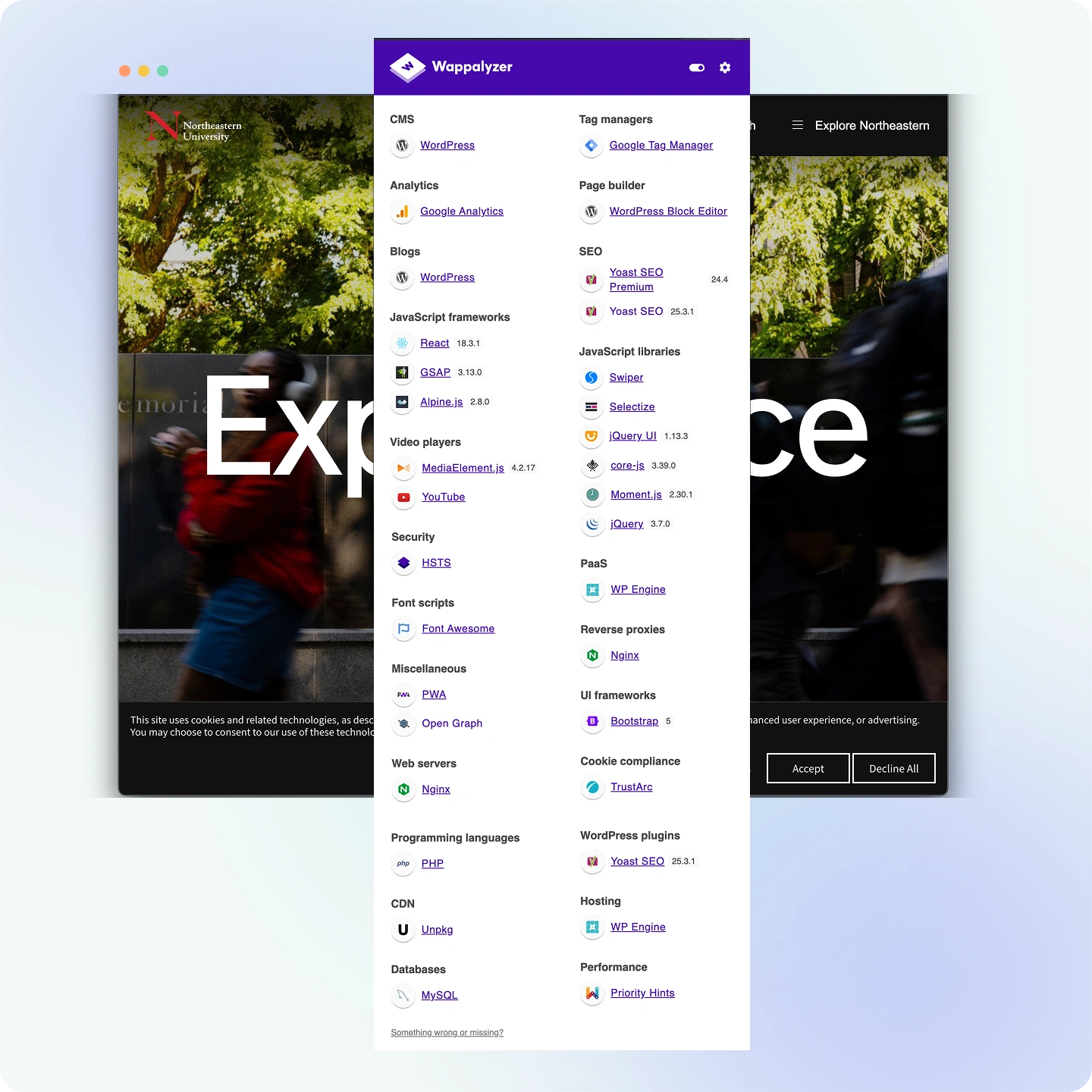
The average university runs several dozen different websites. The largest ones, several hundred. Every school has its own. Every master’s program, its campaign microsite. Every research department, its own editorial logic. Every campus, its own version of the brand.
The result is predictable: different teams using different tools, with different publishing standards and levels of visual coherence ranging from the brand manual to pure improvisation. No one has a complete picture of what the university is saying, how it’s saying it, or whether every message points in the same direction.
A recent Pathify survey of U.S. universities documented the invisible cost of this fragmentation: scattered digital systems erode student success, sense of belonging and satisfaction before students even set foot on campus. The problem doesn’t start with the on-campus experience. It starts with the first digital interaction, which is usually the institutional website.
This fragmentation also has a direct effect on how your content gets found: when each site lives in its own silo, neither your users nor search engines connect the information. We explored this in detail in why your university’s search engine doesn’t work.
The real cost: beyond operational inefficiency
When people discuss fragmented tools at a university, the conversation usually drifts toward internal efficiency: more IT tickets, more time lost, more strain on the technical team. All of that is real and quantifiable.
But the deeper cost is strategic.
At a moment when European and Latin American universities compete for a generation of students who expect digital experiences on par with the best consumer brands, every week a campaign is delayed is a week in which the candidate has already received four touchpoints from other institutions. Every landing page that takes three weeks to ship is an opportunity that closes before it opens. Every outdated microsite is a signal of disorganization that the prospect interprets—rightly or wrongly—as a reflection of the entire institution.
The correlation between a unified digital ecosystem and enrollment results is documented. The University of Nevada, Las Vegas (UNLV) is one of the most cited examples in the sector. According to a recent EdTech Magazine analysis, the institution partly credits its unified digital platform with a 61% increase in admissions applications, 14% enrollment growth, and an improvement of more than five percentage points in student retention over eight years. The institution’s digital lead explains it this way: the key was moving from a reactive model to a predictive one, only possible when systems are connected and offer a 360-degree view of the student.
That leap—from reactive to predictive—is what separates the institutions that grow from those that merely survive the cycle.
What the most advanced universities are doing
The pattern that repeats among institutions with the strongest digital performance follows a clear logic: consolidate multiple fragmented tools onto a single platform, gain critical mass in one use case, and expand from success.
The University of Notre Dame started with IT Service Management. It then extended the same platform to security, human resources, compliance and endpoint management. UNLV did something similar with its CRM: it began with the admissions funnel and gradually expanded to cover enrollment, advising, tutoring, financial aid and alumni. Western Governors University applied the same model to security and employee administration.
In every case, the result has been the same: a single source of truth, connected data, teams that stopped duplicating work, and a coherent institutional vision where there used to be silos.
The same principle applies exactly to the university’s web layer.
The institutions winning the digital race don’t have hundreds of websites managed by a hundred different teams using different tools. They have a unified ecosystem where every site—every school, every campus, every campaign microsite—lives under the same technological umbrella, shares the same brand resources, and lets any team member publish with full autonomy, instantly and always consistent with the institutional identity.
The goal isn’t to centralize creative control. The goal is to centralize governance so that editorial autonomy becomes possible at scale.
From theory to data: what happens when a university unifies its web
At Griddo we work with universities in Spain, Portugal and Latin America. Last month’s data offers a concrete picture of what operating with a unified ecosystem actually looks like.
In one month, IE University operates 1,944 active pages in two languages and publishes 3,562 times, with a median of 18 minutes per page. Nebrija, with content in three simultaneous languages, is able to publish in under 15 minutes. Comillas published 2,234 times across 493 active pages in June, reflecting an editorial team with real cadence, not occasional use.
Compare that with the sector benchmark: in a traditional CMS, putting a landing page into production requires between five and ten IT tickets and takes an average of three weeks. In Griddo, the same process takes two days—and if the marketing team handles it directly, it can be measured in hours.
“Griddo is allowing us to publish at a rate I couldn’t imagine. Compared to our previous WordPress, we are publishing programs x10 faster.”
— Pablo Landaluce, former Communications Manager at CUNEF
The impact goes beyond speed. At IE University, the migration transformed the infrastructure team’s work structure: from dedicating 40% of its capacity to maintaining the web platform, they dropped to 5%. The 35% of recovered capacity was redirected to strategic integrations and projects that generate real institutional value.
At the Catholic University of Maule (UCM) in Chile, consolidating three separate portals—institutional, undergraduate and graduate—under a single ecosystem is producing measurable results: a 140% increase in web traffic, a 53% improvement in load performance (LCP dropped from 3.8 to 1.8 seconds) and full availability during the critical enrollment period, with peaks of 2,500 simultaneous visitors and no service degradation.
“We went from the favela to the Palace of Versailles.”
— Orietta Dennett, Director of Communications at UCM
The crawl, walk, run model: how it’s done in practice
Unifying the university’s digital ecosystem doesn’t require a multi-year project or a total systems migration. The institutions that have executed this transition best have followed a gradual approach: start where the pain is most visible, prove value fast, and let success build internal traction.
UDIT—University of Design, Innovation and Technology—unified three fragmented sites onto a single platform in six months. The marketing team gained editorial autonomy from launch day.
“Griddo has allowed us to take our digital strategy to the next level, giving us the agility we needed to innovate and connect better with our students.”
— Antonio Rutia, Marketing Director at UDIT
At Comillas Pontifical University, consolidation produced something beyond speed: brand coherence at institutional scale. With dozens of editors publishing across different sections of the ecosystem, visual and message consistency stopped depending on manual reviews.
“Griddo has given us a level of coherence we had never achieved. Every page has the Comillas voice: consistent, recognizable, ours.”
— Lucía Tornero, Communications team at Comillas
The pattern is the same in every case. You start with the main site or the most critical enrollment microsite. You gain speed and confidence. You extend the ecosystem organically, as other departments see what’s possible and ask to join. The platform stops being an IT or Marketing project and becomes an asset teams demand.
From maintenance liability to growth engine
There’s a qualitative difference between a marketing team that waits and a marketing team that operates.
When real autonomy to publish exists and it can be done in minutes, the nature of what’s possible changes entirely. An enrollment campaign can be adjusted in real time to the results of the first few days. An open-day landing page can be live in hours, not weeks. Multilingual content doesn’t require multiplying the team, but a platform that handles localization natively. Every updated program is a positive signal for search engines. Every campaign published on time is an admissions cycle that isn’t lost.
The university website stops being a maintenance cost and becomes a growth asset. And that shift doesn’t happen when a new tool arrives. It happens when the entire ecosystem works as one.
The result, as UNLV’s trajectory documents, isn’t measured only in operational efficiency. It’s measured in applications, in enrollment, in retention. In the institution’s ability to anticipate needs and respond faster than the competition.
The question worth asking today
How many sites does your university manage right now? How many different teams publish content with different tools? How long does a critical landing page take from brief to production?
The answers aren’t a diagnosis of operational efficiency. They’re an indicator of institutional competitiveness.
The universities that are growing have one thing in common: they’ve moved from managing fragmented tools to managing an ecosystem. The difference isn’t only technological. It’s strategic. And in an environment where close to half of students weigh the digital experience in their decision, speed to publish is, also, speed to enroll.
Want to see how it works in practice? Explore the use cases at griddo.io or request a personalized demo with your team.