Beyond Content Management: Governance with Griddo App
Griddo App puts governance in the pocket of decision-makers: portable traceability, consolidated view, and executive peace of mind without opening the CMS.

Key Takeaways
- The invisible problem: Most institutions don't have a publishing problem; they have a governance problem that rarely shows up in reports until it produces a costly failure.
- The missing link: Solving fragmentation and content alone isn't enough. Without leadership visibility, governance is delegation without a safety net.
- Griddo App: An additional layer on top of Griddo's activity log that puts traceability and a consolidated ecosystem view within reach of rectors, CMOs, and CIOs — without opening the CMS.
Most universities don’t have a publishing problem. They have a governance problem.
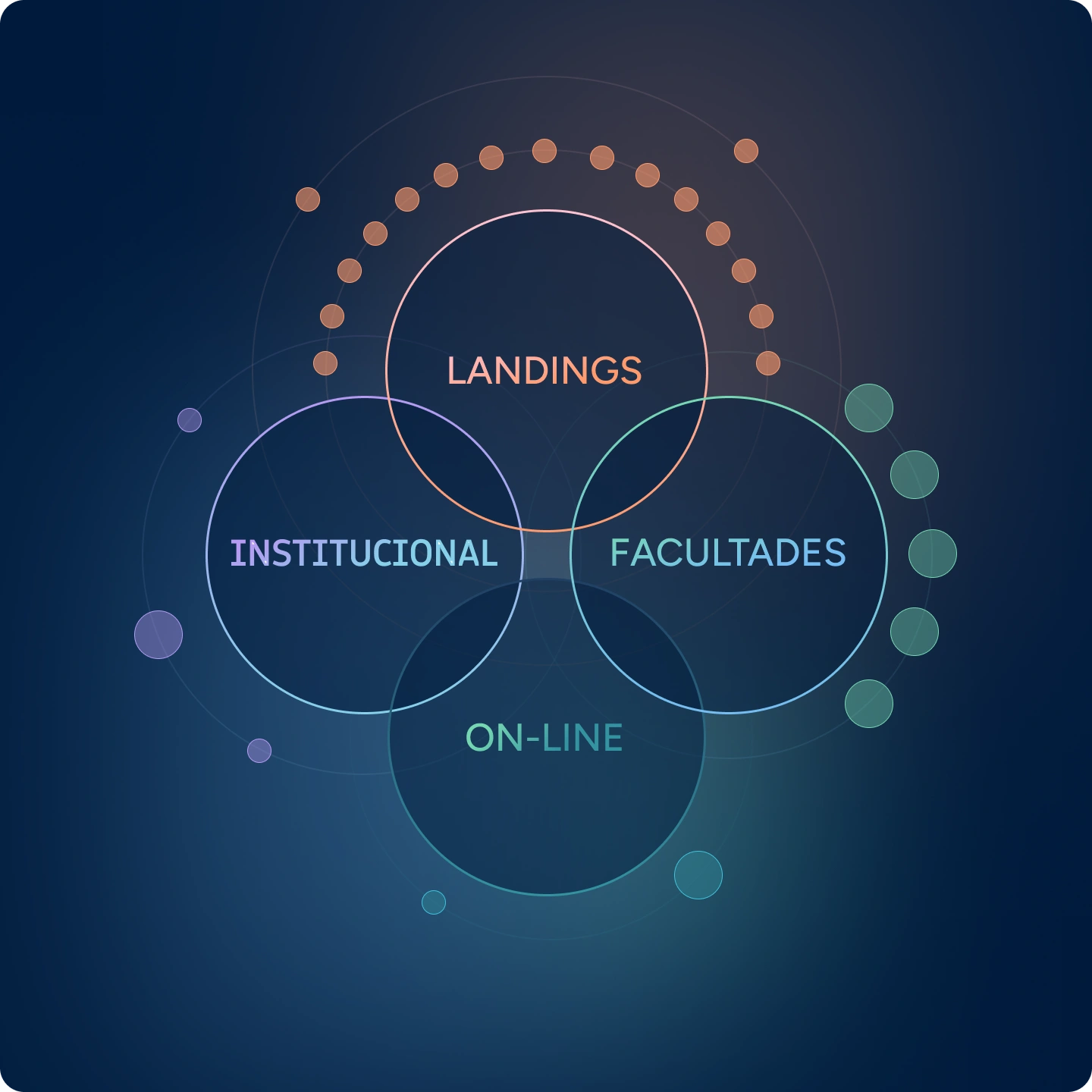
Their teams publish. Their faculties have websites. Their content exists. But that content lives fragmented across dozens of different systems — often without institutional consistency, without a single source of truth, and without anyone being clearly responsible for what appears where.
The result is what we’ve described throughout this series on governance: an ecosystem that publishes, but doesn’t govern.
The problem CMS platforms don’t solve
As EDUCAUSE documents in its analysis on IT governance in higher education, many institutions carry vulnerabilities not because of missing policy, but because of missing operational visibility into what’s happening inside their systems. And competitive pressure doesn’t leave room for that kind of opacity: McKinsey shows that institutions that don’t adapt their digital model to the expectations of the new student see their position deteriorate regardless of academic quality.
Governance without leadership visibility isn’t complete governance. It’s delegation without a safety net.
The real cost of governing blindly
The absence of leadership visibility doesn’t produce spectacular failures. It produces a silent erosion — hard to attribute and almost impossible to budget for.
An outdated price nobody caught until a prospect called confused. An admissions page modified by a local editor using their own criteria. An acquisition campaign pointing to content that changed without notice. None of these mistakes shows up in a report. All of them have a real cost: reputation, Marketing team efficiency, internal trust.
The question isn’t whether an institution can afford a layer of accountability. It’s whether it can afford to keep operating without one.
Griddo App: governance at your fingertips
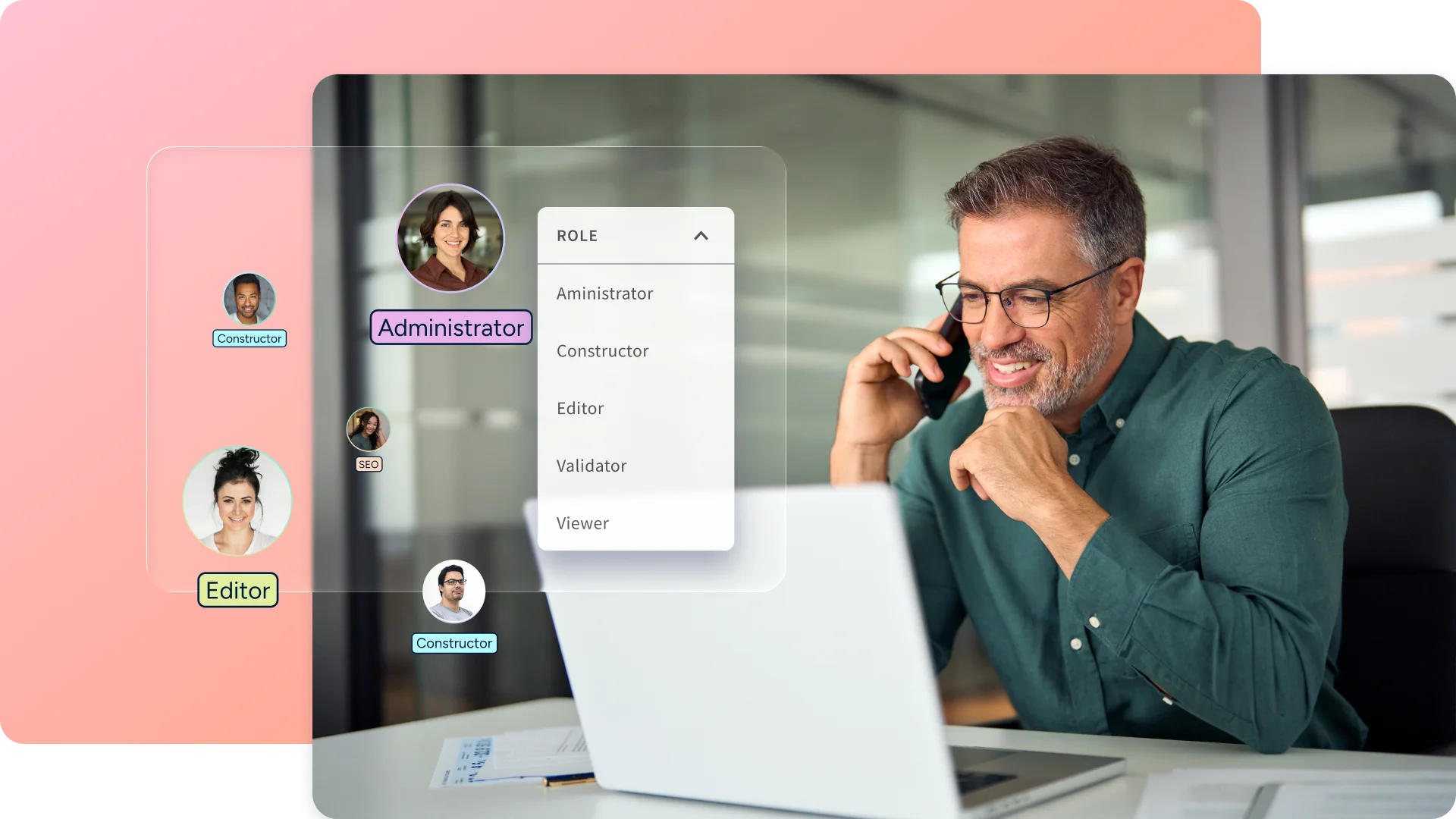
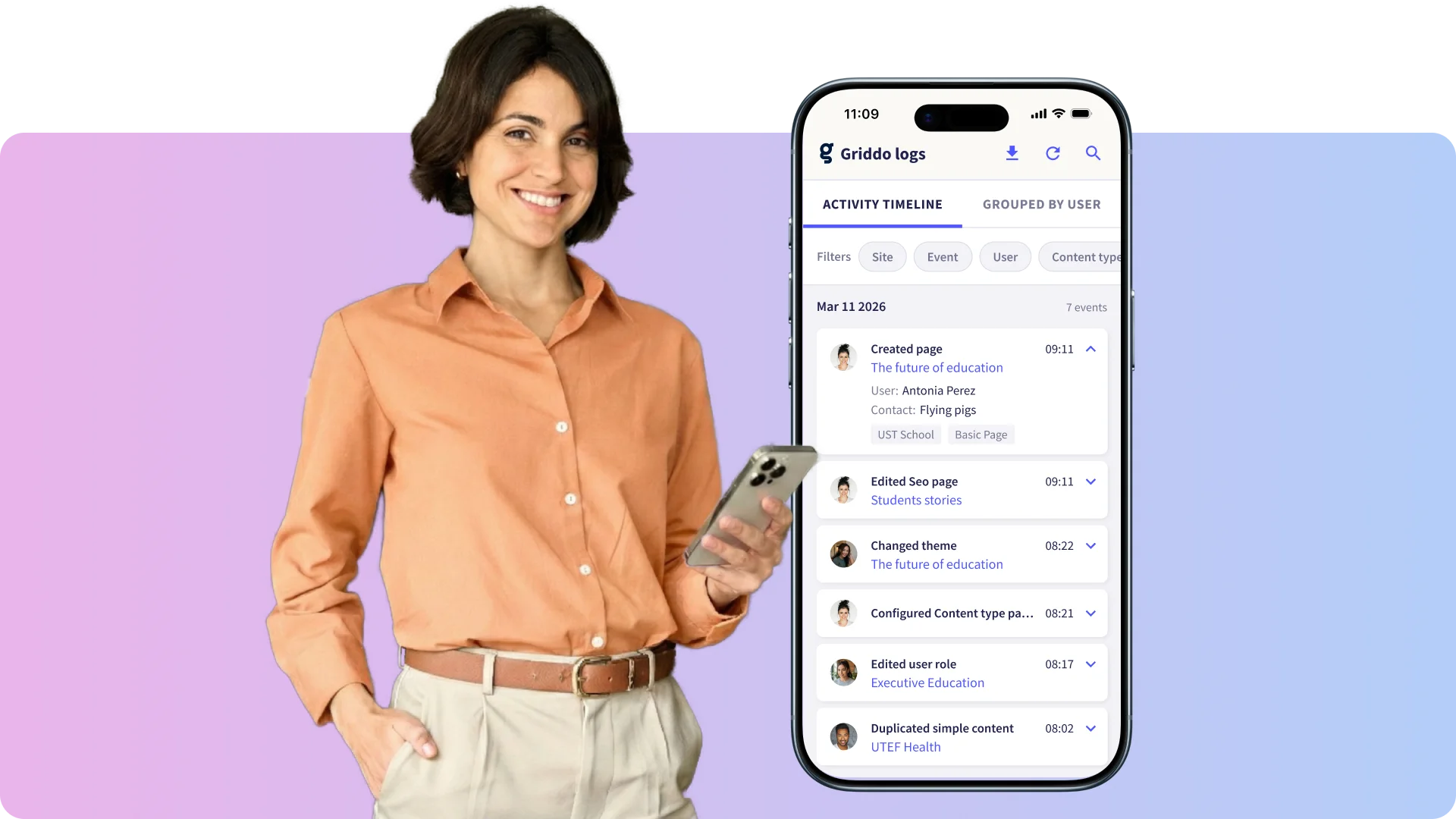
Griddo already captures every activity across the digital ecosystem in its activity log: who publishes what, when, from which role, and on which site. That traceability has existed in the platform from day one, because governance without a record isn’t governance.
Griddo App is born from that same conviction: if governance is a principle and not a feature, it has to be available for whoever needs it, anytime, anywhere. Not just in the CMS. Not just on the desktop. Always.
Griddo App isn’t a new tool or a separate product. It’s an additional layer on top of the governance Griddo already offers — accessible to rectors, Marketing directors, and CIOs without having to open the CMS.
Governance and peace of mind, within reach
It isn’t a mobile editor. It isn’t a simplified version of the CMS. It’s Griddo’s activity log in a format built for decision-makers, with the context a leader needs and nothing they don’t.
The result isn’t control. It’s executive peace of mind: the ability to delegate with real confidence, because governance doesn’t stop when the leader closes the laptop.
That idea connects with what we already argued in Delegate without losing control: leaders don’t need to supervise every action — they need to know there’s a system of record answering for them.
The governance that transforms the institution
Throughout this series we’ve defended one central idea: governance isn’t a document or a policy. It’s a live question — who is responsible for what, and how do we know?
Griddo already had that answer. The App puts it in the pocket of whoever has to provide it, at all times.
With this article we close the loop: responsibility, transparency, accountability, and sustainability. If you want to see how Griddo App works in practice, you can request a no-commitment demo.